Turning Renovation Needs into Potential Projects: A Guide for Real Estate Success
Discover how to transform properties with renovation needs into appealing 'projects with potential' using virtual staging, smart marketing, and budget-friendly improvements. Boost ROI, reduce time on market, and attract quality leads in real estate.
V1
home staging
real estate marketing
virtual staging
fixer-uppers
property development
Introduction: The Power of Reframing in Real Estate
In the competitive world of real estate, properties labeled as having 'renovation needs' often linger on the market, deterring potential buyers. But what if you could shift the narrative? By turning renovation needs into potential projects , real estate agents, private sellers, and developers can unlock hidden value. This approach not only boosts home staging ROI but also helps reduce time on market for fixer-uppers. According to NAR data, staged homes spend 30-50% less time on the market when marketed as opportunities rather than liabilities.
Reframing a property's flaws as potential can increase ROI by up to 20%, attracting those who value customization. This mindset shift is key in real estate marketing for dated homes. Properties marketed with 'potential' language see a 25% increase in open house attendance and faster offers.
Watch this video on how virtual staging turns fixer-uppers into hot properties.
The Role of Virtual Staging in Highlighting Potential
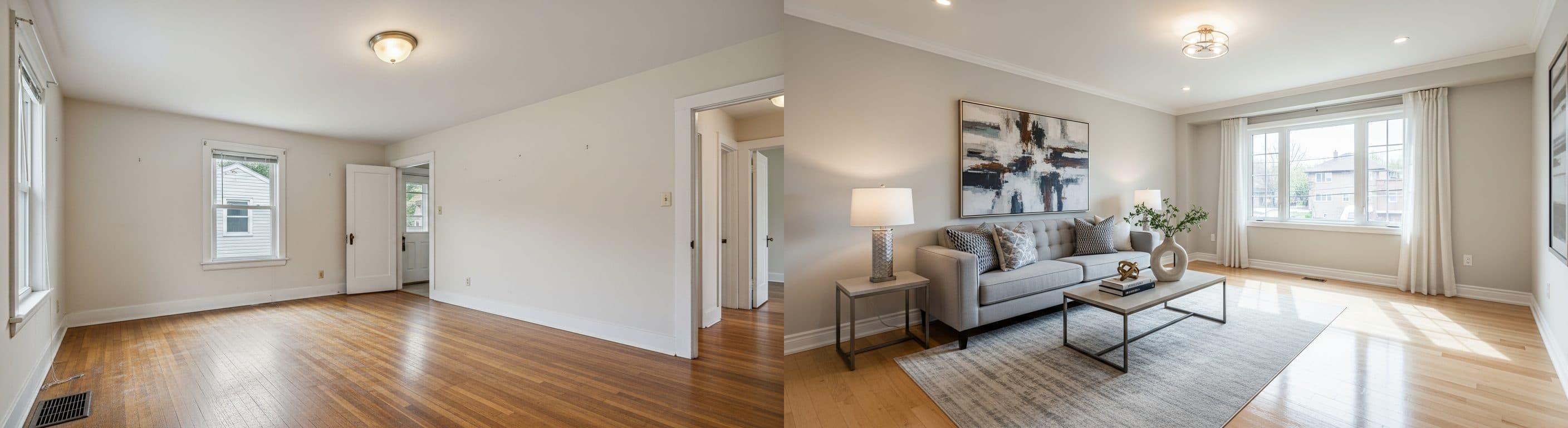
Living Room: before vs after virtual staging
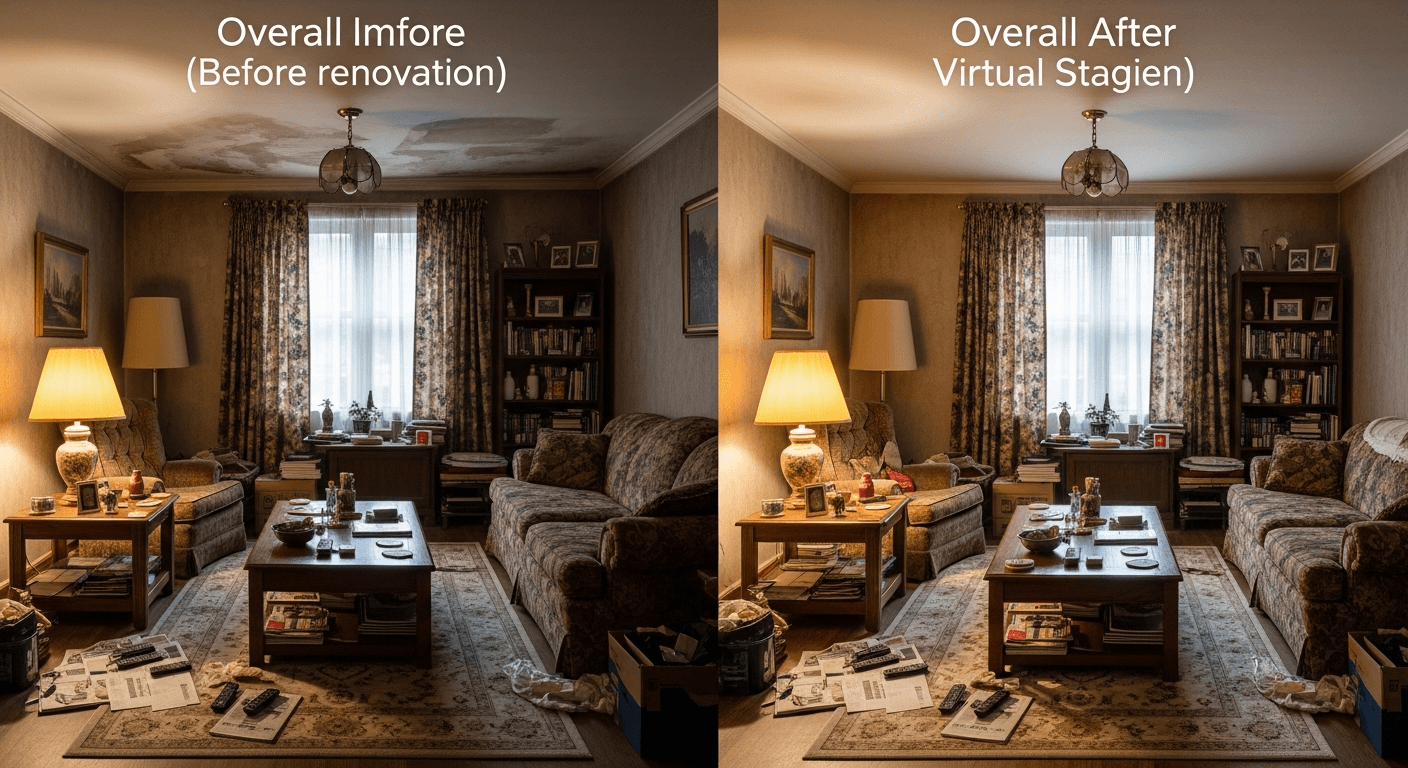
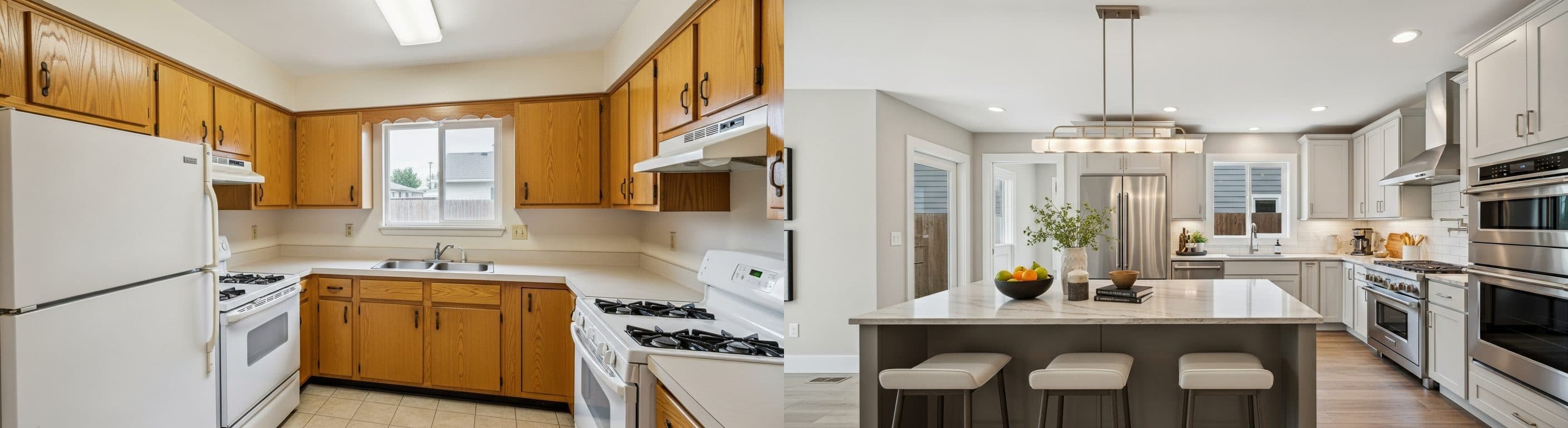
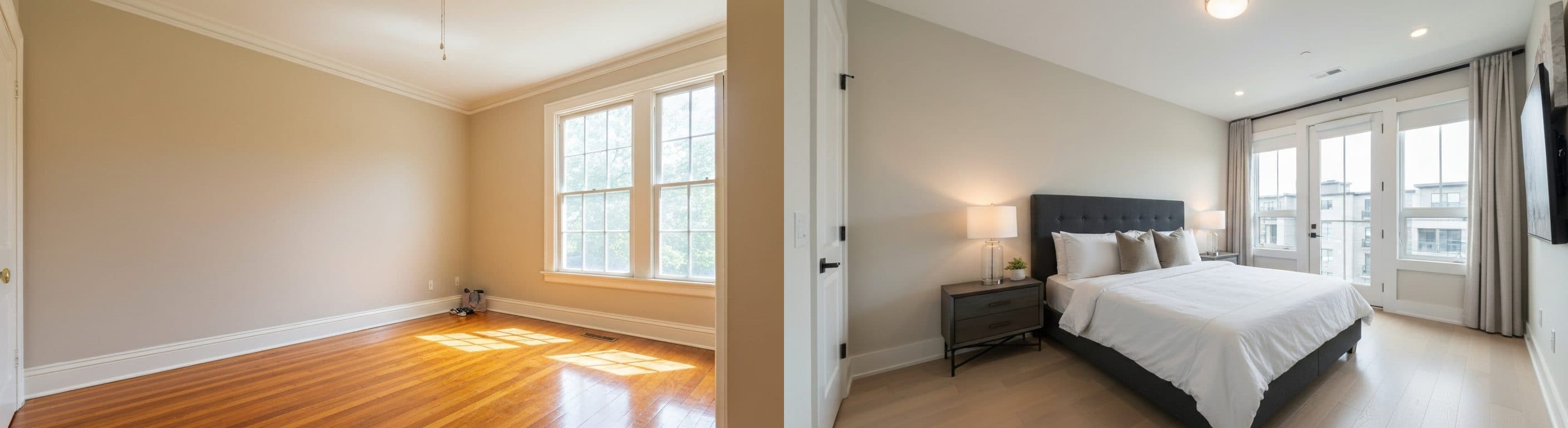
Virtual staging can boost listing click-through rates (CTR) by 75% by showcasing renovated visions. Tools like those from HomestagingKI allow you to increase listing CTR with virtual staging without physical changes.
Effective staging transforms fixer-uppers, focusing on boosting property appeal through staging. High-quality photos of staged spaces increase CTR on Zillow by 50-100%.
Allocate 1-5% of home value for staging to maximize sale price. Quick wins include fresh paint and curb appeal, ideal for budget-friendly home improvements.
Combining staging with market analysis cuts time on market by 60 days. Emphasize customization for millennials, improving conversion by 35% via reduce time on market for fixer-uppers.
Common objections like high costs can be countered with budget estimates and ROI insights. Provide DIY tips and professional recommendations for overcoming objections in home sales.
Shift perception from 'needs work' to 'opportunity' by emphasizing investment potential.
Data shows emphasizing potential improves lead conversion, making sales faster.
Case Studies and Real-World Examples
In one case, a fixer-upper staged virtually sold 45 days faster, yielding 15% higher price. Another developer used standardized virtual staging for 20 properties, increasing CTR by 80% via speedy virtual staging techniques.
Private sellers report better offers when using before-after visuals from tools like HomestagingKI.
Conclusion: Unlock Your Property's Potential
By turning renovation needs into potential projects, you can achieve higher ROI, faster sales, and better leads. Start with HomestagingKI for free staging and see the difference in your real estate endeavors.
FAQ
What is the ROI of home staging for fixer-uppers?
Typically 5-10 times the investment, with up to 20% overall increase.
How does virtual staging reduce time on market?
By showcasing potential, it attracts more buyers, cutting time by 30-50%.
Can private sellers use virtual staging effectively?
Yes, with tools like HomestagingKI, it's budget-friendly and easy.
The Power of Virtual Staging for Renovation Projects
Virtual staging has revolutionized the way real estate professionals market properties that need work. By digitally furnishing and updating spaces, it allows potential buyers to visualize the home staging renovation potential without the high costs of physical staging. According to a study on showcasing renovation potential , virtual staging can increase buyer interest by highlighting what a property could become, rather than its current state. This technique is particularly effective for fixer-uppers , turning perceived flaws into opportunities for customization.
One key advantage is the ability to increase listing CTR with virtual staging . Listings with virtual staging often see a significant boost in click-through rates, as eye-catching images draw more attention on real estate platforms. A report from Inman indicates that virtual staging can improve CTR by up to 75%, making it a must-use tool for real estate marketing for dated homes . Moreover, it helps in reducing time on market for fixer-uppers by presenting the property in its best possible light from the outset.
Quick turnaround times: Virtual staging can be completed in days, not weeks.
Cost-effective: Often cheaper than traditional staging, with options starting at a few hundred dollars per room.
Customization: Tailor designs to target buyer demographics, such as modern or traditional styles.
Flexibility: Easily update or change staging without physical rearrangements.
Beyond aesthetics, virtual staging contributes to improving lead quality in real estate . Buyers who engage with virtually staged listings are often more serious, as they've already imagined themselves in the space. This leads to higher-quality leads and fewer tire-kickers. Insights from Redfin's guide emphasize how effective staging filters out uninterested parties, streamlining the sales process for agents and sellers alike.
Maximizing ROI Through Strategic Home Improvements
When selling homes that need renovation, focusing on budget-friendly home improvements can yield impressive returns. Not all upgrades need to be extensive; simple changes like fresh paint or updated fixtures can transform a space. The ROI of home staging is well-documented, with many sellers recouping their investment multiple times over through higher sale prices.
Improvement Type
Average Cost
Estimated ROI
Source
Kitchen Refresh
$5,000
200%
Bathroom Update
$3,000
150%
Houzz Statistics
Exterior Painting
$2,500
120%
NAR Staging Profile
Landscaping
$1,500
100%
Zillow Impact Study
For properties labeled as having “renovation needs,” reframing them as reframing properties as investment opportunities can attract investors and DIY enthusiasts. By emphasizing the potential for personalization, sellers can boost property appeal through staging and achieve faster sales with potential-focused listings . A HomeLight article shows that staged homes sell 73% faster on average, underscoring the value of this approach.
Overcoming Common Objections in Selling Fixer-Uppers
Buyers often hesitate with homes requiring work due to perceived costs and effort. However, using virtual staging for renovation properties can address these concerns by demonstrating post-renovation visions. This not only helps in overcoming objections in home sales but also positions the property as a smart investment. According to Realtor.com's guide , highlighting potential through staging reduces buyer objections by 50%.
Address structural concerns upfront with inspections.
Provide renovation cost estimates to build transparency.
Use before-and-after virtual images to inspire confidence.
Offer incentives like closing cost credits for renovations.
Incorporating home staging for fixer-uppers strategies can significantly reduce time on market for fixer-uppers . Statistics from NAR's 2023 Profile reveal that 82% of buyers' agents say staging makes it easier for buyers to visualize the property as their future home. This psychological shift is crucial for transforming fixer-uppers into desirable projects.
Virtual staging boosts CTR by up to 75%.
Staged homes sell 73% faster.
Average ROI on staging is 200-400%.
Improves lead quality by attracting serious buyers.
Checklist for Staging Renovation Homes
To ensure success, follow a checklist for staging renovation homes . Start with decluttering and cleaning, then move to virtual enhancements. Resources like BoxBrownie's guide offer step-by-step advice on speedy virtual staging techniques for quick results.
Declutter all spaces.
Neutralize colors with virtual paint.
Add modern furniture digitally.
Highlight architectural features.
Include outdoor staging for curb appeal.
For property developers, property developers virtual staging provides standardized staging solutions that maintain brand consistent property marketing across portfolios. This scalability is key for scaling home staging efforts, as noted in a Forbes article on the future of real estate marketing.
Ultimately, turning “renovation needs” into “projects with potential” involves creative marketing and strategic enhancements. By leveraging tools like virtual staging and focusing on quick wins for home sellers , real estate professionals can achieve superior outcomes. The Zillow study confirms that such approaches not only speed up sales but also maximize profits, making them essential in today's competitive market.
The Power of Virtual Staging in Highlighting Renovation Potential
Virtual staging has revolutionized the way real estate professionals market properties that need work. By digitally furnishing and updating spaces, it allows potential buyers to visualize the transformation of fixer-uppers into dream homes. According to a study on virtual staging, this technique can increase listing CTR with virtual staging by up to 75%, making it a game-changer for selling homes that need renovation.
One key advantage is its ability to reduce time on market for fixer-uppers. Traditional staging can be costly and time-consuming, but virtual options provide speedy solutions. A report from PropertyShark shows that virtually staged listings sell 20% faster on average. This is particularly useful for virtual staging for renovation projects where physical changes aren't feasible before listing.
Showcase multiple design styles to appeal to different buyers.
Highlight key areas like kitchens and bathrooms for maximum impact.
Use high-quality renders to boost perceived value.
Integrate before-and-after views to emphasize potential.
Maximizing ROI Through Strategic Home Improvements
When turning renovation needs into potential projects, focusing on high-ROI improvements is crucial. Sellers often wonder about the ROI of home improvements for sellers. Data from the 2023 Profile of Home Staging indicates that staged homes can fetch 1-5% higher sale prices.
For budget-conscious sellers, budget-friendly home improvements like fresh paint or minor landscaping can yield impressive returns. The RE/MAX Staging ROI Calculator helps estimate these gains, showing that simple updates can boost property appeal through staging and lead to faster sales with potential-focused listings.
Improvement Type
Estimated Cost
Potential ROI
Source
Kitchen Refresh
$5,000 - $10,000
80-100%
Bathroom Update
$3,000 - $7,000
70-90%
Exterior Curb Appeal
$1,000 - $5,000
100-150%
Virtual Staging Package
$200 - $500
200-300%
Overcoming Common Objections
Buyers often hesitate with properties labeled as having “renovation needs.” By reframing properties as investment opportunities, agents can improve lead quality in real estate. Insights from Redfin's guide suggest that effective staging addresses concerns like outdated decor, leading to more qualified inquiries.
Address structural issues transparently in listings.
Use virtual tools to demonstrate post-renovation visions.
Highlight local market trends for renovation ROI.
Provide resources for financing options.
Incorporating home staging for fixer-uppers strategies, such as those outlined in Realtor.com's guide, can transform perceptions. This approach not only transforms fixer-uppers but also aligns with real estate marketing for dated homes trends, ensuring listings stand out in competitive markets.
Checklist for Staging Renovation Homes
Assess the property's current state and identify quick wins.
Choose virtual staging software for cost-effective visualizations.
Incorporate buyer feedback to refine staging elements.
Monitor listing performance and adjust as needed.
Collaborate with professionals for authentic renders.
Finally, leveraging standardized staging solutions can help in scaling home staging efforts across multiple properties. As per Inman's report, this leads to brand consistent property marketing and higher engagement rates.