Real Estate Photo Editing: What's Effective vs. Unprofessional
Discover the dos and don'ts of real estate photo editing. Learn how professional enhancements can boost your listings while avoiding unprofessional edits that erode trust and lead to legal issues. Perfect for agents, sellers, and developers.
V1
real estate photography
virtual staging
property marketing
home selling tips
immobilienfotografie
In the competitive world of real estate, first impressions matter. Your property photos are often the first thing potential buyers see, and they can make or break a listing. That's where real estate photo editing comes in. But how do you strike the balance between effective enhancements and unprofessional manipulations? This guide explores what's sensible in immobilien bildbearbeitung and what might come across as unserious or even deceptive.Virtual Staging: Pros and Cons
Why Real Estate Photo Editing Matters
High-quality images can significantly impact your listing's performance. According to data from the National Association of Realtors (NAR) , listings with edited photos sell 32% faster than those with unedited images. Professional photo editing can increase listing click-through rates (CTR) by up to 35% by making properties more visually appealing without misleading alterations.Is Virtual Staging Worth the Investment
For real estate agents, private sellers, and developers, investing in virtual staging tips can lead to a higher ROI. Effective edits like color correction and minor clutter removal can reduce time on market by 20-30 days, ultimately boosting your bottom line.Virtual Staging: How It Works and Why It Matters
When done right, photo editing isn't just an expense—it's an investment. Agents report that high-quality, honest photo edits yield better-qualified leads, as buyers arrive with accurate expectations, boosting conversion rates. Studies show an ROI of 200-300% by accelerating sales and commanding higher offers.Online Real Estate Market Statistics
Increase in CTR: Up to 35%
Reduction in time on market: 20-30 days
Improved lead quality: 15-25% better conversion
Effective Real Estate Image Enhancement Techniques
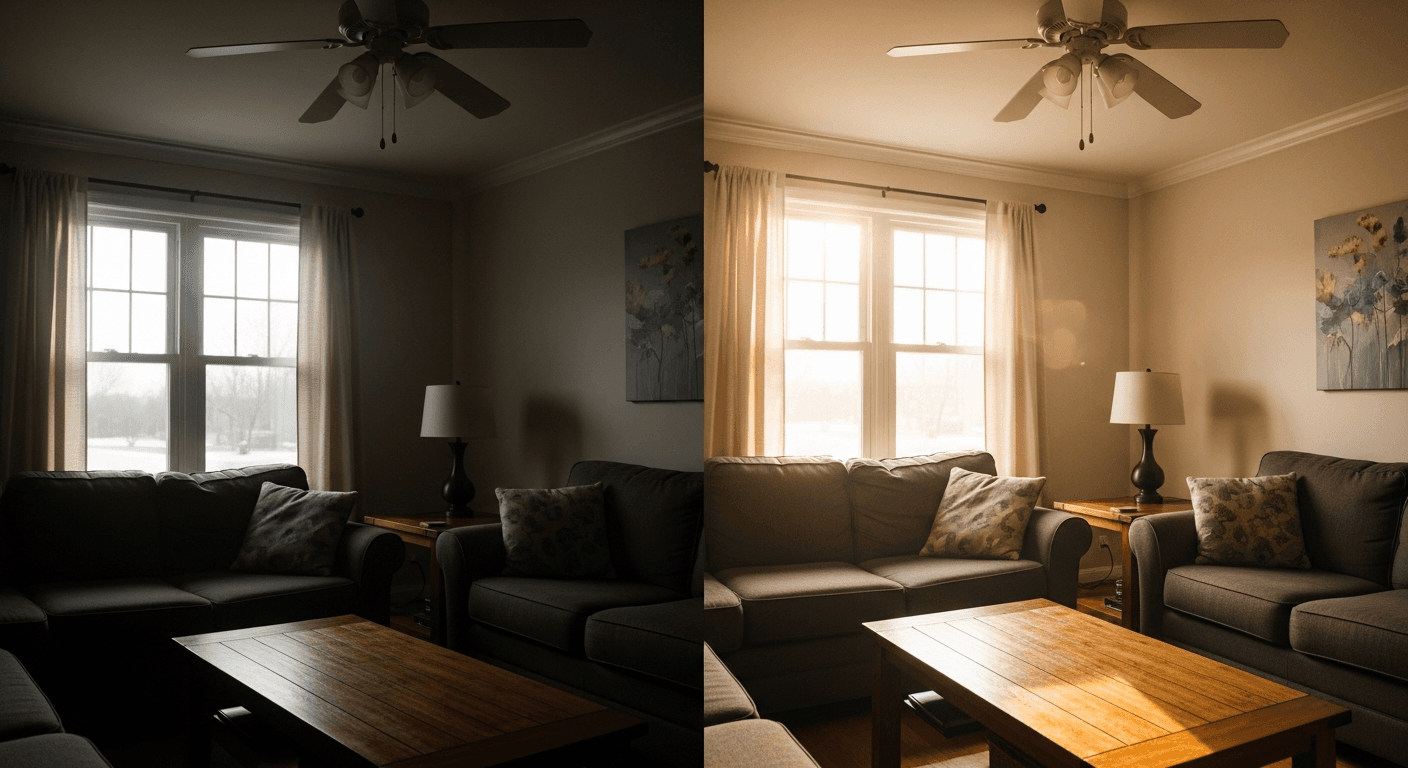
Focusing on natural lighting enhancements in edits can improve CTR without risking perceptions of dishonesty. For instance, using tools like Adobe Lightroom for professional property photos ensures subtle improvements that attract more views.Benefits of Virtual Staging for Agents
Color correction to fix lighting issues
Minor clutter removal for a cleaner look
Perspective straightening for accurate room proportions
Virtual Staging Tips for Success
Try HomestagingKI for free
Upload a room photo and get a staged version in minutes. No furniture logistics, no waiting.
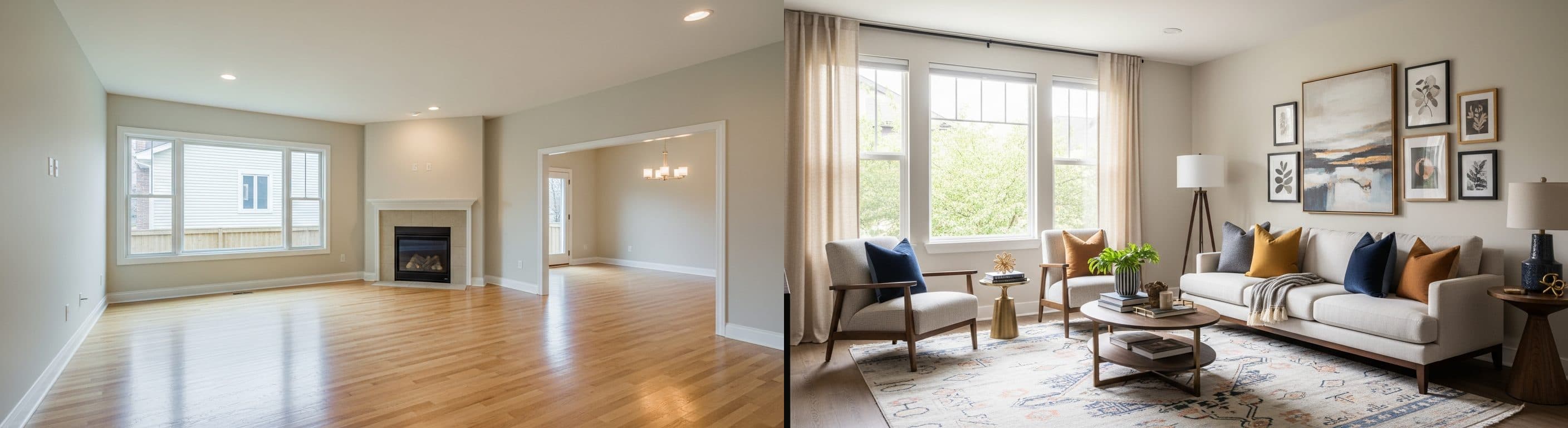
Virtual staging is particularly useful for empty properties. Subtle edits can improve buyer engagement, with studies showing a 12% increase in inquiries when images are realistically enhanced. Always label virtual staging to maintain transparency.Current Trends in Virtual Staging
For developers, virtual staging tips can showcase potential without physical staging costs. Remember, balancing edits to highlight strengths while maintaining authenticity is key in competitive markets.Easy Real Estate Photo Editing Tips
Avoiding Unprofessional Edits in Property Photos
On the flip side, over-editing can backfire. Adding fake furniture or altering structural elements can appear unprofessional and erode trust, potentially decreasing lead quality by 15-25%. Unprofessional edits like excessive Photoshopping can lead to negative reviews and legal issues.
Common pitfalls include avoiding unprofessional edits such as removing permanent fixtures or changing exterior views, which can mislead buyers and increase time on market.
Effective Edit
Unprofessional Edit
Impact
Color correction
Adding fake furniture
Boosts appeal vs. erodes trust
Clutter removal
Altering structures
Reduces market time vs. legal risks
Lighting enhancement
Excessive retouching
Increases CTR vs. negative reviews
Common Mistakes and How to Avoid Them
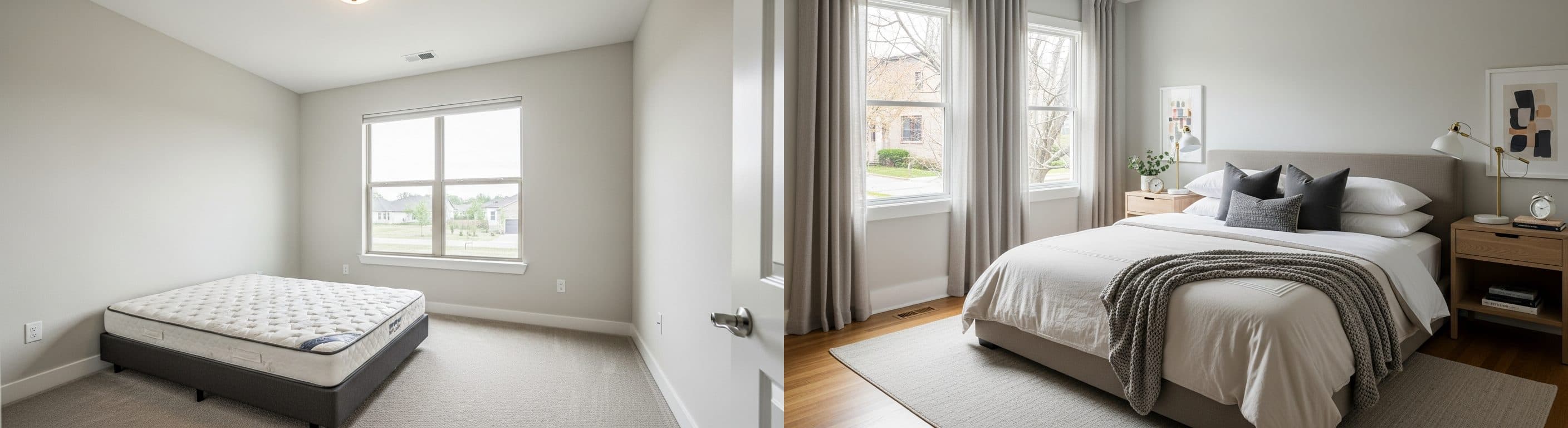
Bedroom: before vs after virtual staging
Before & After that gets clicks
Photorealistic virtual staging for agents and private sellers—optimized for portals and social ads.
Häufige Fehler bei Immobilienbildern include over-saturation of colors or ignoring authenticity. To avoid these, use a checklist: ensure clean rooms, good lighting, wide-angle shots, and minimal editing.
Clean the space before shooting
Use natural light where possible
Apply only basic edits like brightness and contrast
Disclose any virtual staging
For private sellers, budget tips suggest starting with 50-200€ per room via freelancers on Fiverr, rather than expensive agencies.
Professional Real Estate Photo Editing
ROI and Data-Driven Insights
Data from Statista indicates that well-edited photos can shorten selling time by up to 30%. Virtual staging through subtle edits improves buyer engagement significantly.
Agents using professional editing see better lead quality improvement, as realistic photos set accurate expectations.
32% faster sales with edited photos (NAR)
12% increase in inquiries with virtual staging
200-300% ROI on editing investments
Budget for Real Estate Photography
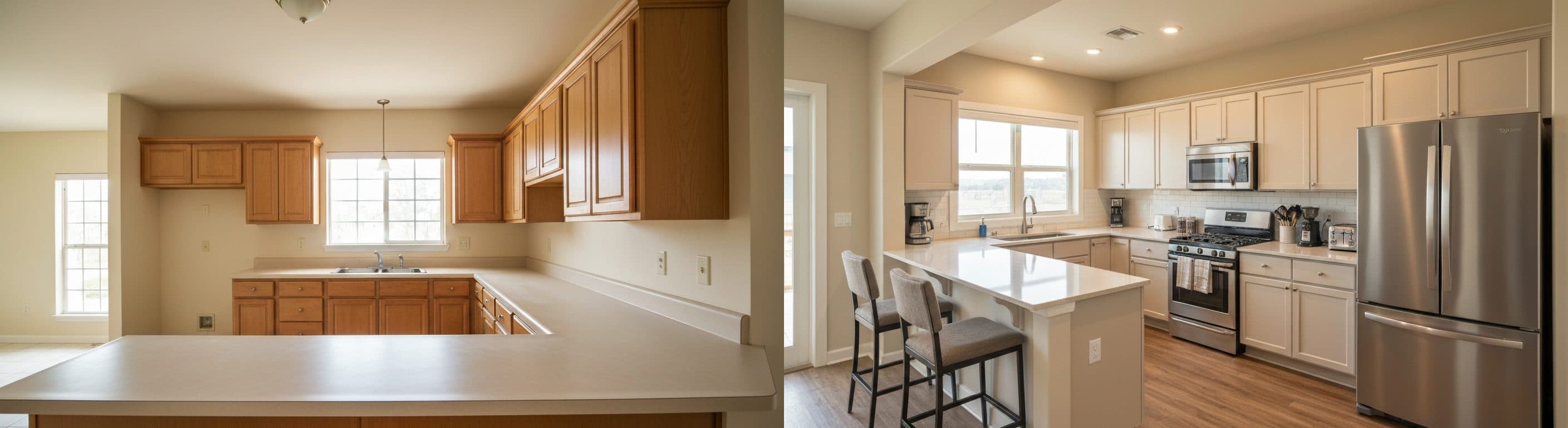
Need better photos for your listing?
Convert empty rooms into warm, modern interiors. Increase engagement and reduce time on market.
Private sellers can achieve quick wins with free tools like GIMP or Canva for simple adjustments. For better results, invest in professional software without overdoing it.
Overcoming objections: Many fear editing looks like fraud. Solution: Be transparent by noting edits in listings.
Implement simple edits for immediate impact: enhance colors, straighten lines, and remove small distractions. These can boost listing CTR without much effort.
For developers, scaling photo editing across multiple properties maintains consistency and improves overall marketing.
Professional Real Estate Photo Editing
Ethical Considerations in Bildretusche Immobilien
Ethics play a big role. Avoid unseriöse Bildmanipulation by not adding or removing objects that aren't there. This prevents disappointing buyers and potential lawsuits.
Studies from Redfin show that honest visuals lead to higher satisfaction and faster closings.
Aspect
Sensible Approach
Unserious Approach
Furniture
Virtual staging labeled
Fake additions undisclosed
Exterior
Light enhancement
Altering views
Interior
Clutter removal
Structural changes
Tips for Immobilienbilder
Focus on Tipps für Immobilienbilder like using professional photographers and subtle edits to optimize for online ads.
In summary, professional edits enhance appeal, while unprofessional ones risk reputation. Use tools wisely and always prioritize authenticity.
FAQ
What is the best software for real estate photo editing?
Adobe Lightroom is popular for professional results, while free options like GIMP work for basics.
How much should I budget for photo editing?
Private sellers can start at 50-200€ per room using freelancers.
Is virtual staging ethical?
Yes, if labeled clearly to avoid misleading buyers.
Benefits of Professional Real Estate Photo Editing
Professional photo editing can significantly enhance the appeal of real estate listings, leading to better engagement and faster sales. According to a study by the National Association of Realtors, properties with high-quality images sell 32% faster than those without. This is because well-edited photos highlight the best features of a home, making it more attractive to potential buyers. Virtual Staging in Real Estate Report emphasizes the role of virtual staging in increasing buyer interest. Moreover, investing in professional editing can improve the return on investment (ROI) by reducing time on market and boosting listing click-through rates.
Increased Click-Through Rates: Listings with edited photos receive up to 118% more views, as per Zillow's research.
Reduced Time on Market: Properties sell faster, often within weeks instead of months.
Higher Sale Prices: Enhanced visuals can lead to offers closer to the asking price.
One key aspect is virtual staging, which allows empty rooms to be digitally furnished. This technique helps buyers visualize the space without the costs of physical staging. However, it's crucial to use it ethically to avoid misleading representations. The Impact of Virtual Staging on Home Sales study shows that virtually staged homes receive 20% more saves and shares on their platform.
Common Mistakes in Real Estate Photo Editing and How to Avoid Them
While photo editing offers many advantages, certain practices can make listings appear unprofessional or even deceptive. Over-editing, such as removing permanent fixtures or altering structural elements, can lead to distrust among buyers. For instance, erasing power lines or neighboring buildings might seem helpful but often backfires when buyers visit the property. The article on The Dos and Don'ts of Real Estate Photo Editing outlines that such manipulations can result in legal issues and negative reviews.
Over-Saturation of Colors: Making images too vibrant can look unnatural; stick to realistic enhancements.
Ignoring Lighting Balance: Poorly corrected shadows can make rooms appear smaller or uninviting.
Excessive Virtual Staging: Adding unrealistic furniture or decor that doesn't fit the space's scale.
Failing to Disclose Edits: Always note if images are virtually staged to maintain transparency.
To avoid these pitfalls, agents should focus on subtle improvements like color correction, brightness adjustments, and minor blemish removals. Tools like Adobe Photoshop are excellent for these tasks, as detailed in Real Estate Photo Editing with Photoshop. This approach ensures photos are appealing yet honest, fostering trust with potential clients.
ROI Analysis: Investing in Real Estate Photography and Editing
Calculating the ROI of real estate photo editing is essential for agents and sellers. Professional photography and editing can cost between $100 to $500 per listing, but the benefits often outweigh the expenses. A report from ROI of Professional Real Estate Photo Editing indicates that listings with professional edits see a 15-20% increase in final sale prices. Additionally, reduced time on market means lower holding costs for sellers.
Aspect
Effective Editing
Unprofessional Editing
Impact on ROI
Click-Through Rate
Natural enhancements boost views by 50%+
Over-edits deter clicks
Positive: Higher engagement leads to quicker sales
Time on Market
Reduces by 30-50 days
Can prolong due to mistrust
Positive: Saves on marketing costs
Lead Quality
Attracts qualified buyers
Attracts skeptical inquiries
Positive: Improves conversion rates
Sale Price
Increases by 5-10%
May lead to price reductions
Positive: Higher profits for sellers
Virtual staging, in particular, offers a high ROI. According to Is Virtual Staging Worth the Investment? , the average cost is $50-100 per image, yet it can increase buyer interest by 75%. This makes it a cost-effective alternative to traditional staging, which can run into thousands of dollars.
Ethical Considerations in Real Estate Image Enhancement
Ethics play a crucial role in real estate photo editing. Misleading edits can violate industry standards and lead to penalties. The National Association of Realtors provides guidelines on Ethics in Virtual Staging and Photo Editing , stressing the importance of transparency. For example, agents must disclose if photos have been digitally altered beyond basic corrections.
Always disclose virtual staging in listings.
Avoid altering permanent features like room sizes or views.
Use editing to enhance, not deceive.
Comply with local real estate regulations.
By adhering to these ethical standards, professionals can build long-term credibility. A study from The Ethics of Photo Editing in Real Estate highlights that ethical practices lead to better client relationships and repeat business. In contrast, unprofessional edits can result in complaints and damage to reputation.
Practical Tips for Effective Virtual Staging
Virtual staging is a powerful tool when used correctly. Start by choosing furniture that matches the property's style and target demographic. For modern homes, opt for sleek, contemporary pieces, while traditional properties benefit from classic designs. The guide from Virtual Staging: How It Works and Why It Matters explains that realistic scaling prevents the staging from looking cartoonish.
Select High-Quality Software: Tools like BoxBrownie offer user-friendly interfaces.
Match Room Functionality: Stage kitchens with appliances and bedrooms with beds.
Incorporate Lifestyle Elements: Add subtle decor to evoke emotion.
Test Multiple Versions: A/B test staged vs. unstaged photos to see what performs better.
Furthermore, integrating virtual staging with other marketing strategies can amplify results. Combining it with professional photography tips from Real Estate Photography and Editing Tips ensures a cohesive listing presentation. This holistic approach not only reduces time on market but also improves overall lead quality.
Case Studies: Success Stories in Real Estate Photo Editing
Real-world examples illustrate the impact of proper photo editing. In one case, a vacant property in California saw a 40% increase in inquiries after virtual staging, as reported in Virtual Staging Study: Effects on Buyer Interest. The listing sold within two weeks, far below the market average. Another example from New York showed that color-corrected photos led to a 15% higher sale price.
Case Study
Editing Technique Used
Outcome
Source
California Vacant Home
Virtual Staging
40% more inquiries, sold in 2 weeks
Redfin Study
New York Apartment
Color Correction and Brightness
15% higher sale price
Zillow Research
Texas Suburban House
Minor Retouching
Reduced time on market by 25 days
NAR Report
Florida Condo
Full Enhancement Suite
Improved CTR by 60%
Inman Article
These cases demonstrate that when done right, photo editing is not just an expense but an investment. Agents should consider budgeting for these services, as outlined in Photo Editing Tips for Property Listings , to maximize their marketing effectiveness.
Tools and Resources for Real Estate Photo Editing
Several tools are available for agents looking to edit photos in-house or outsource. Adobe Photoshop remains a top choice for advanced edits, while Canva offers simpler options for beginners. The tutorial on Easy Real Estate Photo Editing Tips provides step-by-step instructions for quick enhancements. For virtual staging, platforms like BoxBrownie are popular for their affordability and speed.
Adobe Photoshop: Ideal for professional-level corrections.
Canva: User-friendly for basic edits and staging.
PicMonkey: Great for quick tutorials and templates.
BoxBrownie: Specialized in real estate virtual staging.
Outsourcing to services like Virtuance can save time, ensuring high-quality results. Their blog on Real Estate Photo Editing Best Practices shares insights on achieving professional outcomes without common errors.
Future Trends in Real Estate Visual Marketing
The real estate industry is evolving with technology. Emerging trends include AI-driven editing and 3D virtual tours. According to Latest News on Virtual Staging Innovations , AI tools are making staging faster and more customizable. This could further reduce costs and improve ROI for listings.
AI Integration: Automates color correction and object removal.
3D Staging: Allows interactive virtual walkthroughs.
Mobile Editing Apps: Enable on-the-go adjustments.
Sustainability Focus: Digital staging reduces physical waste.
As online real estate grows, with statistics from Online Real Estate Market Statistics showing a 25% increase in digital transactions, visual quality will remain paramount. Agents who adapt to these trends will stay competitive, avoiding unprofessional practices that could harm their business.