
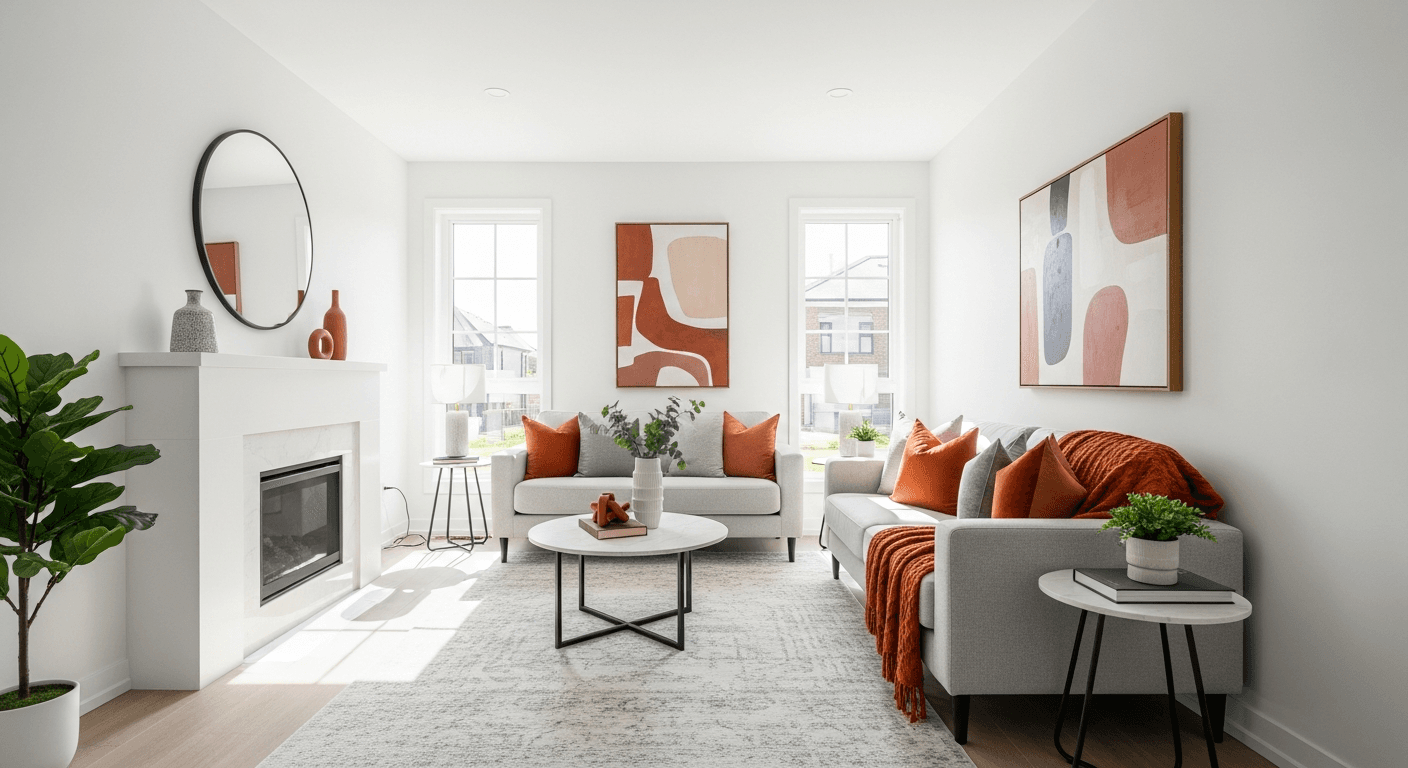
Why Home Staging ROI Is More Than “Sell for More”
- Agents: staging is a listing-winning differentiator and a conversion tool for online leads.
- Private sellers: staging reduces uncertainty, creates stronger first impressions, and can prevent price reductions.
- Developers: staging (especially virtual) standardizes presentation across units, accelerates absorption, and protects brand positioning.
Home Staging Statistics That Matter (Price, Speed, and Clicks)
Sell faster with better listing photos
Virtual staging helps buyers visualize the space. Try HomestagingKI free: 2 images included.
Industry studies commonly cite a 5–20% potential lift in final sale price for staged homes in certain markets and conditions.
Staged homes are frequently reported to spend 50–73% less time on market compared to unstaged listings (market-dependent).
Professional staging photos can drive 3–5x higher click-through rates on major portals—because buyers decide in seconds whether to click.
Staging tends to attract better-qualified leads, reducing lowball offers and “tire-kicker” showings.
Virtual staging can reduce physical staging costs by up to ~90% while preserving much of the online marketing upside.
The Real ROI Funnel: From Listing CTR to Offer Quality
Home Staging Cost vs Value: A Simple ROI Calculator You Can Explain in 30 Seconds
Try HomestagingKI for free
Upload a room photo and get a staged version in minutes. No furniture logistics, no waiting.
- Estimate staging investment: often 1–3% of the home’s value (or a fixed package for key rooms).
- Estimate upside: conservative price lift (e.g., 1–5%) plus time savings (reduced carrying costs, fewer reductions).
- Compare to the cost of “doing nothing”: extra mortgage/taxes/HOA/utilities + risk of a price cut after 2–4 weeks.
Virtual Staging Benefits: When Digital Beats Physical (and When It Doesn’t)
Where virtual staging ROI is strongest

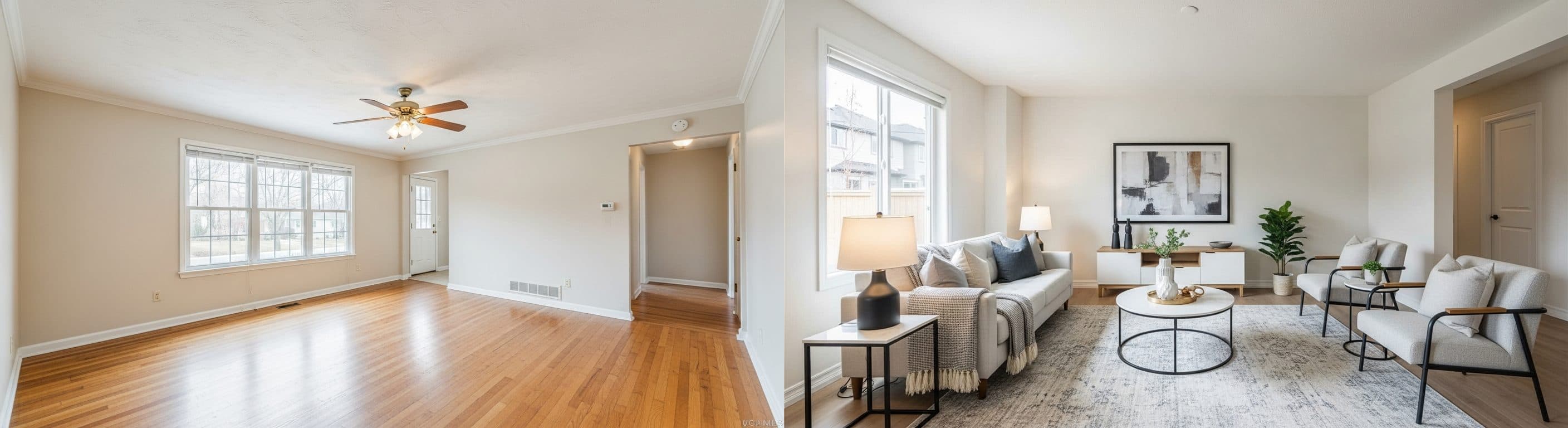
Before & After that gets clicks
Photorealistic virtual staging for agents and private sellers—optimized for portals and social ads.
- Vacant homes: fill the space so buyers understand scale and function.
- Investor flips: show a clean, modern lifestyle without buying furniture.
- Developments with multiple similar units: standardize style and brand alignment across listings.
- Remote sellers: avoid logistics of furniture rental, delivery, and removal.
- Pre-listing marketing: test designs, target demographics, and room functions before committing to physical staging.
Where physical staging still wins
How Staging Helps Reduce Time on Market (and Why That Protects Price)
Need better photos for your listing?
Convert empty rooms into warm, modern interiors. Increase engagement and reduce time on market.
Increase Listing CTR: The Photo Strategy Behind Staging Impact on Sales

CTR-focused photo rules (practical and repeatable)
- Lead with the strongest room: usually living room or kitchen, not the front exterior (unless curb appeal is exceptional).
- Use consistent brightness and white balance across the set—visual consistency increases trust.
- Show function: one clear purpose per room (no “office + gym + storage” combos).
- Remove micro-clutter: cords, countertop appliances, shampoo bottles, pet bowls, fridge magnets.
- Use a wide angle responsibly: keep verticals straight; avoid distortion that feels misleading.
Improve Lead Quality in Real Estate: Why Staging Filters Out Low-Intent Buyers
- Clearer room scale reduces “surprise” objections at showings.
- Neutral, cohesive styling reduces taste-based rejection.
- A consistent photo set increases trust and reduces skepticism.
- Better first impressions create urgency—buyers book showings earlier.
Budget Home Staging Tips: Quick Wins That Move the Needle
Quick wins for home staging (low cost, high impact)
- Declutter aggressively: remove personal items, excess furniture, and anything that blocks walkways.
- Deep clean: windows, baseboards, grout, carpets—cleanliness reads as “well maintained.”
- Neutralize paint: light neutrals photograph better and appeal to more buyers.
- Upgrade lighting: consistent color temperature bulbs; add lamps where needed.
- Curb appeal basics: mow, edge, pressure wash, paint the front door, add two simple planters.
DIY Home Staging Checklist (Agents Can Reuse as a Seller Handout)
- Entry: clear surfaces, add one simple focal point (mirror or plant), ensure bright lighting.
- Living room: remove extra chairs/tables, center rug, add 2–3 pillows, hide cords, clear coffee table.
- Kitchen: clear counters (leave 1–2 items max), remove fridge magnets, replace burnt bulbs, add a bowl of fruit or a small plant.
- Primary bedroom: neutral bedding, two matching lamps, clear nightstands, remove personal photos.
- Bathrooms: new white towels, remove all products, close toilet lids, polish mirrors and fixtures.
- Closets: reduce contents by 30–50%, align hangers, keep floors empty.
- Outdoor: sweep, remove hoses/tools, add two planters, ensure the front door area is spotless.
- Photo day: open blinds, turn on all lights, hide trash cans, remove pet items, do a final walk-through with a camera.
Overcoming Common Home Staging Objections (Scripts That Keep You in Control)
Objection: “It’s too expensive.”
Objection: “My home is fine as-is.”
Objection: “We don’t have time.”
Virtual Home Staging Scale for Developers: Speed, Standardization, and Brand Consistency
What “brand consistency in real estate staging” looks like in practice
- A defined style kit: 2–3 design directions (e.g., Modern Warm, Scandinavian Light, Urban Luxe).
- Consistent camera angles and room order across listings.
- Standard rules for color accents that match the project’s brand.
- A review workflow: one approver ensures every staged image matches the brand before publishing.
Standardized home staging processes (a simple SOP you can adopt)
Real Estate Staging Tips by Property Type (So You Don’t Overstage or Understage)
Condos and small homes
- Prioritize scale: smaller furniture, fewer pieces, clear walk paths.
- Use mirrors and lighting to expand perceived space.
- Show one flexible area (e.g., a small desk) to increase perceived utility.
Family suburban homes
- Define zones: dining, homework nook, play area (but keep it minimal).
- Make storage feel abundant: closets and pantry are “rooms” in buyers’ minds.
- Curb appeal matters more: buyers often drive by before booking a showing.
New builds and developer inventory
- Standardize: same angles, same style kit, same editing approach across units.
- Sell the lifestyle: staged dining and living areas outperform empty rooms online.
- Use virtual staging to test multiple looks for different buyer segments.
YouTube: A Quick Visual Breakdown of Staging ROI
Home Staging ROI Explained for Real Estate Agents
A Practical 7-Day Plan to Prove Home Staging ROI (Without Guessing)
- Day 1: Choose 2–4 hero photos to improve (usually living room, kitchen, primary bedroom, exterior).
- Day 2: Apply quick fixes (declutter, lighting, neutral bedding, countertop reset).
- Day 3: Capture clean photos (consistent exposure, straight verticals).
- Day 4: Add virtual staging to the hero images if needed (especially for vacant rooms).
- Day 5: Publish and reorder photos so the strongest image leads.
- Day 6–7: Track CTR, saves/favorites, inquiries, and showing requests; compare to similar past listings or the first week baseline.
FAQ: Home Staging ROI, Virtual Staging ROI, and Common Decisions
FAQ
What is a realistic Home Staging ROI range?
Does staging really reduce time on market?
How does staging increase listing CTR?
Is virtual staging ethical and allowed?
When should developers use virtual staging at scale?
Sources and Further Reading
Sources
- 2023 Profile of Home Staging (study)
- Staged Homes Sell Faster and for More Money (article)
- Home Staging Statistics: Does Staging Help Sell a House? (article)
- Home Staging ROI: Is It Worth the Investment? (article)
- Home Staging Statistics and Trends (guide)
- Home Staging Statistics: What You Need to Know (article)
- Ultimate Home Staging Checklist (guide)
- Home Staging Checklist for Sellers (guide)
- 10 Quick Wins for Home Staging (article)
- Benefits of Virtual Staging (article)
- Virtual Staging Tool (tool)
- Home Staging on a Budget (article)
- Home Staging on a Budget (article)
- Home Staging Tips to Sell Your House Fast (article)
- The Ultimate Guide to Home Staging (guide)
- Essential Home Staging Tips (article)
- Home Staging Checklist (guide)
- Home Staging Checklist (guide)
- How Virtual Staging Benefits Real Estate Developers (guide)
- Guide to Standardizing Home Staging (guide)
- Scaling Staging Operations for Developers (article)
- Home Staging vs Virtual Staging How Does It Affect the Real Estate Sale? (youtube_placeholder)